Le 1er octobre 2026, l’EU*Asia Institute a organisé un forum en ligne dans le cadre des 100 Heures d’Astronomie, l’initiative mondiale annuelle de sensibilisation menée par Office for Astronomy Outreach de l’Union astronomique internationale (IAU). Réunissant plus de 500 événements dans le monde, l’édition 2026 était consacrée à « un nouveau regard sur le Système solaire », soulignant combien les nouvelles données scientifiques transforment en permanence notre compréhension de l’Univers. Dirigé par Christopher Williams, professeur à l’ESSCA et membre de l’EU*Asia Institute, avec le soutien de la Dre Kelly Blumenthal, de l’Union astronomique internationale à Tokyo, l’ESSCA est devenue la première école de commerce à rejoindre cette initiative, créant ainsi un lieu de rencontre entre astronomes professionnels, enseignants-chercheurs en école de commerce et spécialistes de la médiation en sciences spatiales.
Le forum a souligné l’importance de croiser les perspectives scientifiques, économiques, culturelles et environnementales pour comprendre l’avenir de l’économie spatiale. Le Système solaire représente un champ d’opportunités en pleine croissance, mais transformer la connaissance scientifique en valeur économique durable exige davantage que l’innovation technologique. Cela nécessite également de nouveaux modèles économiques, une formation interdisciplinaire, un véritable engagement du public et une coopération internationale, afin que le développement de l’espace profite à la société tout en respectant l’environnement.
La rencontre de deux mondes : l’astronomie et le monde des affaires
L’un des thèmes majeurs a été le potentiel croissant des connaissances et des infrastructures spatiales pour créer de la valeur sur Terre. De la recherche sur les astéroïdes et de l’éventuelle exploitation future de ressources minérales extraterrestres à la navigation par satellite, l’observation de la Terre et l’expérimentation en milieu spatial, les avancées scientifiques peuvent soutenir des applications dans un large éventail de secteurs. Pourtant, comme plusieurs interventions l’ont souligné, les capacités technologiques ne suffisent pas à créer de la valeur économique : elles doivent être traduites en services répondant à des besoins identifiables. Cela suppose des modèles économiques viables, des investissements, des infrastructures fiables et une compréhension claire de qui sont les utilisateurs finaux. Le développement de l’économie spatiale dépend donc de la capacité à relier recherche, innovation et demande du marché.
Les échanges ont également mis en avant l’importance de rendre l’astronomie accessible et porteuse de sens pour un public plus large. Les phénomènes astronomiques tels que les éclipses solaires peuvent devenir des expériences culturelles partagées, rassemblant des personnes de différents pays et horizons, tout en créant des opportunités pour le tourisme, l’éducation et le développement local. Plus largement, la médiation en astronomie peut aller au-delà de la transmission de connaissances scientifiques : elle peut favoriser les partenariats, développer de nouvelles compétences et susciter des initiatives entrepreneuriales. Des exemples de programmes éducatifs, de tourisme astronomique porté par les communautés et de collaborations entre chercheurs et acteurs locaux ont montré comment l’engagement du public peut devenir le point de départ d’opportunités sociales et économiques durables. Cette perspective a également rappelé l’importance de préserver les savoirs traditionnels et les relations culturelles avec le ciel nocturne.
Des limites que nous ne pouvons ignorer
Toutefois, l’expansion des activités spatiales soulève aussi des questions fondamentales de responsabilité environnementale, de gouvernance et de répartition des bénéfices. Le nombre croissant de satellites et d’objets en orbite, les risques liés aux débris spatiaux et l’éventuelle exploitation des ressources extraterrestres remettent en cause les conceptions traditionnelles de la durabilité. Les discussions ont interrogé la possibilité que le développement économique de l’espace reproduise les modèles extractivistes déjà observés sur Terre, dans lesquels les bénéfices sont concentrés entre un nombre limité d’acteurs tandis que les coûts environnementaux et sociaux sont répartis plus largement. Du point de vue de l’économie écologique, l’élargissement des possibilités technologiques ne se traduit pas nécessairement par un progrès durable, en particulier lorsque la baisse des coûts encourage une hausse de l’activité et de la consommation de ressources.
Ces préoccupations ont conduit à une réflexion plus large sur la nécessité de règles et d’une gouvernance collective avant que l’espace ne devienne un environnement de plus en plus commercialisé. Parmi les propositions figuraient la création d’aires protégées sur la Lune, la réalisation d’évaluations d’impact environnemental pour les activités spatiales et la préservation de sites historiquement significatifs. Plus fondamentalement, les contributions ont soulevé des questions sur l’espace en tant que bien commun mondial : qui doit en réguler l’usage, qui doit bénéficier de ses ressources, et comment les différents pays, entreprises et citoyens peuvent-ils participer à la construction de son avenir ?

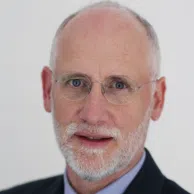
Christopher Williams (ESSCA School of Management & EU*Asia Institute)
Christopher Williams is Professor in the Strategy, Entrepreneurship and International Business Department at ESSCA School of Management in France.

Dr. Kelly Blumenthal - International Astronomical Union (Tokyo)
Title of talk: 100 Hours of Astronomy: Public engagement and the public understanding of science

Can Çetin - Goktenevar (Türkiye)
Title of talk: Scaling the Solar System to visualize cosmic vastness

Antonella Forganni - ESSCA School of Management & EU*Asia Institute
Title of talk: Preparing Students for the New Space Economy

Matthew Kelly - Associate Dean Undergraduate Studies Haub School of Business (USA)
Title of talk: New Perspectives on the Solar System: A Wall Street and Business School View
Matthew T. Kelly, MBA, is Associate Dean for Undergraduate Programs at the Haub School of Business at Saint Joseph’s University. He also teaches finance and directs the university’s Wall Street Trading Room, where he oversees experiential finance programs that connect students with real-world markets and investment decision-making.

Gabriel Weber - ESSCA School of Management & EU*Asia Institute
Title of talk:The Solar System as a Market: A New Frontier or the Old Extractivism?

Harald Köpping Athanasopoulos – EU*Asia Institute / 2b AHEAD
Title of talk:Environmental protection in solar system - why it's time to think about humanity's environmental footprint in space
Harald is an associate researcher at the EU*Asia Institute - ESSCA School of Management and Head of Future Intelligence at 2b AHEAD ThinkTank. He received his PhD from the University of Liverpool Management School. His research interests include space policy, sustainability in space, space popularisation/science fiction and strategic foresight.

Jackie Bondell - Swinburne University of Technology / Australia Representative, International Particle Physics Outreach Group (Australia)
Title of talk: From Science to Opportunity: Creating Value Through Engagement and Education

Saeed Jafari - SPACE GENERATION ADVISORY COUNCIL (SGAC)
Title of talk:Astronomy, Identity and Opportunity: The Untapped Potential of Cultural Connections with Space.
Saeed Jafari is a science communication strategist and a linguist. He has completed his studies in linguistics and cognitive science. He has been working as External Relations Manager at the World Space Week Association and Co-chair of International Decade of Indigenous Languages co-led by UNESCO

Dr Ludan Wu - Tsinghua University (China)
Title of talk: Space Infrastructure as a Market Enabler: From Science to Solar System Applications
Dr. Ludan Wu (PhD, FHEA) is a Postdoctoral Fellow and Shuimu Tsinghua Scholar at the Institute of Economics, School of Social Sciences, Tsinghua University. She received her PhD in Management from Durham University. Her research focuses on international investment, multinational enterprises, innovation and business ecosystems, sustainable development, and economic governance.

Dr. Apostolos Christou - Armagh Observatory and Planetarium (UK)
Title of talk:Asteroid-related research at the Armagh Observatory and Planetarium

Dr Joyful Elma Mdhluli - International Astronomical Union Office of Astronomy for Development (IAU-OAD) (South Africa)
Title of talk:Bridging Astronomy and Business for a Sustainable Space Economy

Mohammad Javad Torabi - Science Communication Journalist (Iran)
Title of talk:Solar Eclipses: New Experiences and New Perspectives. Connecting people through a unique celestial phenomenon