“100 Hours of Astronomy” is a large-scale international science outreach initiative run by the International Astronomical Union (IAU) and taking place around the world from 1st-4th October 2026.
This year, for the first time, a business school joined the initiative: ESSCA School of Management and its EU*Asia Institute hosted an online discussion forum to coincide with 100 Hours of Astronomy.
EU*Asia Institute brings astronomy and business together
On 1 October 2026, ESSCA’s EU*Asia Institute hosted an online forum as part of 100 Hours of Astronomy, the annual global outreach initiative organised by the Office for Astronomy Outreach of the International Astronomical Union (IAU). Bringing together more than 500 events worldwide, the 2026 edition focused on “a new perspective on the Solar System”, highlighting how new scientific data continuously reshape our understanding of the universe. Led by Christopher Williams with the support of Dr. Kelly Blumenthal from the International Astronomical Union in Tokyo, ESSCA became the first business school to join the initiative, creating a meeting point between professional astronomers, business school professors and space science outreach specialists.
The forum highlighted the importance of bringing scientific, economic, cultural, and environmental perspectives together to understand the future of the space economy. The Solar System represents a growing field of opportunity, but turning scientific knowledge into sustainable economic value requires more than technological innovation. It also calls for new business models, interdisciplinary education, meaningful public engagement and international cooperation to ensure that the development of space benefits society while respecting the environment.
The meeting of two worlds: astronomy and business
One of the key themes was the growing potential of space-related knowledge and infrastructure to create value on Earth. From asteroid research and the possible future use of extraterrestrial mineral resources to satellite navigation, Earth observation and space-based experimentation, scientific advances can support applications across a wide range of sectors. Yet, as several contributions highlighted, technological capabilities alone do not create economic value: they must be translated into services that respond to identifiable needs. This requires viable business models, investment, reliable infrastructure, and a clear understanding of who the end users are. The development of the space economy therefore depends on the ability to connect research, innovation, and market demand.
The discussions also highlighted the importance of making astronomy accessible and meaningful to wider audiences. Astronomical phenomena such as solar eclipses can become shared cultural experiences, bringing together people from different countries and backgrounds while creating opportunities for tourism, education and local development. More broadly, astronomy outreach can go beyond communicating scientific knowledge: it can foster partnerships, develop new skills, and generate entrepreneurial initiatives. Examples of educational programmes, community-led astronomy tourism and collaborations between researchers and local actors demonstrated how public engagement can become a starting point for lasting social and economic opportunities. This perspective also raised the importance of preserving traditional knowledge and cultural relationships with the night sky.
There are limits that we cannot ignore.
However, the expansion of space activities also raises fundamental questions about environmental responsibility, governance, and the distribution of benefits. The growing number of satellites and orbital objects, the risks associated with space debris, and the potential exploitation of extraterrestrial resources all challenge conventional understandings of sustainability. The discussions questioned whether the economic development of space could reproduce extractive models already observed on Earth, in which benefits are concentrated among a limited number of actors while environmental and social costs are shared more widely. From an ecological economics perspective, the expansion of technological possibilities does not necessarily translate into sustainable progress, particularly when lower costs encourage increased activity and resource consumption.
These concerns led to a broader reflection on the need for rules and collective governance before space becomes an increasingly commercialised environment. Proposals included the establishment of protected areas on the Moon, environmental impact assessments for space activities, and the preservation of historically significant sites. More fundamentally, the contributions raised questions about space as a global common: who should regulate its use, who should benefit from its resources, and how can different countries, businesses and citizens participate in shaping its future?

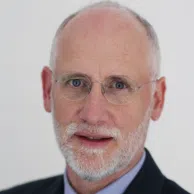
Christopher Williams (ESSCA School of Management & EU*Asia Institute)
Christopher Williams is Professor in the Strategy, Entrepreneurship and International Business Department at ESSCA School of Management in France.

Dr. Kelly Blumenthal - International Astronomical Union (Tokyo)
Title of talk: 100 Hours of Astronomy: Public engagement and the public understanding of science

Can Çetin - Goktenevar (Türkiye)
Title of talk: Scaling the Solar System to visualize cosmic vastness

Antonella Forganni - ESSCA School of Management & EU*Asia Institute
Title of talk: Preparing Students for the New Space Economy

Matthew Kelly - Associate Dean Undergraduate Studies Haub School of Business (USA)
Title of talk: New Perspectives on the Solar System: A Wall Street and Business School View
Matthew T. Kelly, MBA, is Associate Dean for Undergraduate Programs at the Haub School of Business at Saint Joseph’s University. He also teaches finance and directs the university’s Wall Street Trading Room, where he oversees experiential finance programs that connect students with real-world markets and investment decision-making.

Gabriel Weber - ESSCA School of Management & EU*Asia Institute
Title of talk: The Solar System as a Market: A New Frontier or the Old Extractivism?

Harald Köpping Athanasopoulos – EU*Asia Institute / 2b AHEAD
Title of talk: Environmental protection in solar system - why it's time to think about humanity's environmental footprint in space
Harald is an associate researcher at the EU*Asia Institute - ESSCA School of Management and Head of Future Intelligence at 2b AHEAD ThinkTank. He received his PhD from the University of Liverpool Management School. His research interests include space policy, sustainability in space, space popularisation/science fiction and strategic foresight.

Jackie Bondell - Swinburne University of Technology / Australia Representative, International Particle Physics Outreach Group (Australia)
Title of talk: From Science to Opportunity: Creating Value Through Engagement and Education

Saeed Jafari - SPACE GENERATION ADVISORY COUNCIL (SGAC)
Title of talk: Astronomy, Identity and Opportunity: The Untapped Potential of Cultural Connections with Space.
Saeed Jafari is a science communication strategist and a linguist. He has completed his studies in linguistics and cognitive science. He has been working as External Relations Manager at the World Space Week Association and Co-chair of International Decade of Indigenous Languages co-led by UNESCO

Dr Ludan Wu - Tsinghua University (China)
Title of talk: Space Infrastructure as a Market Enabler: From Science to Solar System Applications
Dr. Ludan Wu (PhD, FHEA) is a Postdoctoral Fellow and Shuimu Tsinghua Scholar at the Institute of Economics, School of Social Sciences, Tsinghua University. She received her PhD in Management from Durham University. Her research focuses on international investment, multinational enterprises, innovation and business ecosystems, sustainable development, and economic governance.

Dr. Apostolos Christou - Armagh Observatory and Planetarium (UK)
Title of talk: Asteroid-related research at the Armagh Observatory and Planetarium

Dr Joyful Elma Mdhluli - International Astronomical Union Office of Astronomy for Development (IAU-OAD) (South Africa)
Title of talk: Bridging Astronomy and Business for a Sustainable Space Economy

Mohammad Javad Torabi - Science Communication Journalist (Iran)
Title of talk: Solar Eclipses: New Experiences and New Perspectives. Connecting people through a unique celestial phenomenon