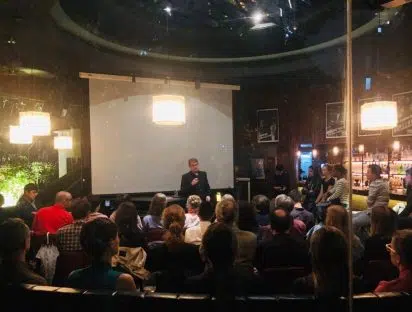
4th Edition Opening Conference
This conference marks the launch of a new fourth-year course at ESSCA and connects to research at ESSCA, particularly Sonia Chikh M'hamed's research projects within the EU*Asia Institute.
Date: Friday, 23 January 2026, 10.45 am CET / 3.15 pm India time / 1:45 am Portland time
Venue: ESSCA Campus Angers & Online
Click here to attend this event online
Background
Escalating geopolitical crises, including the war in Ukraine, energy security concerns, and instability in the Middle East, continue to disrupt the global political and economic order. These crises are not only deepening existing challenges—such as economic recession, social unrest, and political fragmentation—but are also contributing to climate change and environmental degradation.
At the same time, they are accelerating the dynamics of geopolitical polarization, strategic competition, and regional fragmentation across the global economy. The frequency and severity of natural disasters, including floods, typhoons, and wildfires, are escalating, resulting in substantial human, economic, and ecological losses (IPCC, 2022).
In the face of these complex and interconnected issues, policymakers, business leaders, and entrepreneurs are confronted with a dual challenge: to mitigate short-term economic downturns and social instability while staying on an ambitious path toward sustainable development and enhancing societal resilience.
Transitioning towards resilient, low-emission economies (the “green transition”) has never been more urgent, requiring coordinated efforts to balance short-term recovery with long-term, transformative climate objectives.
This task is increasingly complicated by supply chain disruptions, energy price volatility, and heightened concerns over economic and strategic security. This delicate balancing act calls for innovative policy solutions, cross-sector collaboration, and a renewed focus on strengthening resilience to both environmental and socio-economic shocks (OECD, 2020).
These challenges underscore the need for consistent and coherent regulatory frameworks within the European Union and across regions and nation-states worldwide. The pursuit of an ambitious green transition also requires new ways of thinking among entrepreneurs and decision-makers, moving beyond “business as usual” toward “business unusual,” and ultimately toward “regenerative business models[1]” that integrate sustainability, resilience, and long-term value creation.
Global cooperation remains critical in this endeavor. Major economic blocs—namely the EU, the United States (U.S.), Asia-Pacific, and the Middle East and North Africa (MENA)—are revising their strategies to address both green transition objectives and broader geopolitical pressures, including decoupling, de-risking, and regional fragmentation. At the same time, cooperation is becoming more selective and contested, as regions recalibrate policies to reconcile sustainability goals with competitiveness, security, and resilience concerns. However, each region faces unique opportunities and constraints, calling for tailored policy responses and cross-border collaboration to achieve shared sustainability outcomes.
Against this backdrop, this conference aims to foster a deeper understanding of how global and regional efforts can align to accelerate green transformation. It will examine the role of innovative business practices, assess the policy frameworks shaping sustainable development, and promote dialogue among major regions on strategies to build resilient and sustainable economies under conditions of heightened geopolitical uncertainty and economic polarization.
Objectives
- Better understanding of green transition frameworks in the EU, the United States, Asia- Pacific and MENA regions, including how these frameworks are evolving in response to geopolitical crises, energy security concerns, and economic uncertainty,
- Rethinking the global business environment in times of policy crisis and geopolitical fragmentation, and the role of the private sector in balancing sustainability objectives with competitiveness and resilience,
- Fostering cross-regional Collaboration and Policy Innovation through exchanging innovative approaches to speed up the transformation towards a sustainable, resilient economy under conditions of increased geopolitical polarization, through multilevel and multi-stakeholder approaches.
Guiding questions
- What are the key political, economic, and social drivers of green transition in the EU, the U.S., Asia-Pacific, and MENA regions, and how do these frameworks respond to the specific regional challenges posed by geopolitical crises, energy security pressures and economic pressures?
- How can we ensure that the green transition continues to advance, despite the risks of geopolitical tensions, economic recessions, and regional fragmentation (e.g., by decoupling or de-risking), while avoiding new forms of economic or technological exclusion?
- What role do innovative business models play in advancing the green transition, and how can businesses in different regions collaborate to create value across stakeholders — nature, societies, employees, investors, and citizens — in an increasingly fragmented global economy while achieving environmental and societal goals?
- How can global and regional regulatory frameworks be aligned to unleash the potential of the private sector, encourage innovation, and create a sustainable business environment across regions while reconciling sustainability, competitiveness, and resilience objectives?
- In what ways can Europe, the United States, Asia-Pacific, and MENA regions better contribute to the next phase of green transition (i.e., in Europe, the European Green Deal has entered the second phase of its implementation - see “Europe’s Choice”) in a context of heightened geopolitical uncertainty, that ensures shared prosperity and environmental stewardship for all?
Agenda
10:30 – 10:45 Registration and Coffee/Tea
10:45 – 10:50 Welcoming Remarks & Introduction
Prof. Thomas Hoerber, Associate Dean of Faculty - Angers campus, Director of the EU*Asia Institute, ESSCA School of Management
10:50 – 12:00 Roundtable Discussion: Rethinking Globalisation under Green Transitions Frameworks
Introduction & Moderation: Dr. Sonia Chikh M’hamed, Associate professor, ESSCA School of Management & EU*Asia Institute, Angers, France
- Europe: Dr. Peter Hefele, Policy Director, Wilfried Martens Centre, Brussels
- Asia-Pacific: Prof. Shalini Rahul-Tiwari, Associate Professor, IMT Ghaziabad, India
- United States: Mr. Dave Chen, CEO and Chairman, Equilibrium Capital, United States
- Africa and Middle East: Prof. Adel Ben Youssef, Associate Professor at University Côte d'Azur (HDR), France
Moderation inter-campus:
ESSCA Angers:
Dr. Sonia CHIKH M’HAMED, Associate Professor, ESSCA School of Management & EU*Asia Institute
Mr. Reed MEISTER, Adjunct Professor, ESSCA School of Management
ESSCA Aix:
Ms. Aude HAINAUT, Adjunct Professor, ESSCA School of Management
ESSCA Bordeaux:
Prof. Ignazio CABRAS, University of Northumbria & ESSCA EU*Asia Institute
Prof. Gabriel WEBER, ESSCA School of Management & ESSCA EU*Asia Institute, Bordeaux campus
ESSCA Boulogne:
Mr. Philippe BOUVIER, Adjunct Professor, ESSCA School of Management
ESSCA Lyon:
Mr. Olivier EVANNO, Adjunct Professor, ESSCA School of Management
ESSCA Shanghai:
Dr. Lingfang SONG, Professor, ESSCA School of Management & EU*Asia Institute
12:00 – 12:30 Discussion
12:35 – 12:45 Conclusion & End of the Conference
Dr. Sonia Chikh M’hamed, Associate professor, ESSCA School of Management & EU*Asia Institute, Angers, France.
Click here to attend this event online

Dr. Peter Hefele
Policy Director
Wilfried Martens Centre for European Studies, Brussels
ph@martenscentre.eu | www.martenscentre.eu
Peter Hefele holds a PhD in Economics and Economic History from the Catholic University of Eichstätt-Ingolstadt. He began his career as an economic researcher at the Institute for Economy and Society in Bonn before joining the Konrad-Adenauer-Stiftung in 2003, where he initially led the Economic Policy and Political Education Department. In 2006, he took on responsibility for China, Southeast Asia, and India within KAS’s Asia and Pacific team in Berlin.
Between 2010 and 2015, he served as Head of the KAS China Office in Shanghai, followed by four years directing the Regional Project “Energy Security and Climate Change” (RECAP) based in Hong Kong SAR. He later returned to Berlin as Director for Asia and the Pacific at KAS headquarters from 2019 to 2020. Since January 2022, he has been Policy Director at the Wilfried Martens Centre for European Studies, the official think tank of the European People’s Party.
His expertise spans foreign and security policy, economic policy, international development cooperation, and energy and climate policy, with a strong regional focus on Asia’s political, economic, and social dynamics.
He is fluent in German, English, and Hungarian, and has a working knowledge of French and Italian.

Prof. Shalini Rahul-Tiwari
Associate Professor, IMT Ghaziabad, India
stiwari@imt.edu
Shalini Rahul-Tiwari is an Associate Professor in the area of Strategy, Innovation & Entrepreneurship at IMT Ghaziabad. She is the President of the Institute Innovation Council (IIC) and Chairperson of the Entrepreneurship Cell. She teaches courses such as Strategic Management, Strategy Implementation, Strategy Simulations (Capsim, Marketplace, Cesim and EnParadigm), Entrepreneurship Workshops, Strategies in Emerging Markets, and Design Thinking. She is a certified ESG and CSR Consultant and Trainer. She is regularly invited to deliver keynote addresses and workshops in these areas.
She has delivered training programs to well-known corporations, such as Reckitt Benckiser, Maruti Suzuki, True Value, Coca-Cola (India), GMR- Delhi Airport Authority of India, The Times of India (Bennett Coleman Ltd), AMDOCS, Airport Authority of India, Hero Moto Corp Ltd., and Indian Postal Academy.
She has done her Ph.D. in Strategic Management from MDI, Gurgaon, India. She has a keen interest in academic administration, research, teaching, training, and consultancy. She has written several research articles, case studies, book chapters, short articles, and books for various international and national publications. She has presented her research at AoM, AIB, ANZAM, EAM, and other prestigious conferences.
She has worked as an ‘Independent Director’ for corporate boards. Currently, she is a board member at Intec Capital Ltd., Cranex Ltd., and Magnum Ventures Ltd. She is also an Associate Editor for Emerald Emerging Markets Case Studies Journal. She has been invited to deliver several programs at international institutions, including The Burgundy School of Business (France), The KEDGE Business School (Bordeaux, France), ESSCA Business School (Shanghai, China) & IMT Dubai.
She is an avid reader, rally enthusiast, traveler, and nature lover.

Prof. Adel Ben Youssef
Associate Professor at University Côte d'Azur (HDR)
adel.benyoussef@gmail.com
Adel BEN YOUSSEF is an Associate Professor of Economics at Université Côte d’Azur and a permanent member of the CNRS research laboratory GREDEG (UMR 7321). He is also an associate researcher at the Economic Research Forum (Cairo) and the Global Labor Organization (Bonn). Internationally recognized for his work on ecological and digital transitions, he has made major contributions to advancing the concept of the twin transition—the synergy between digital innovation and environmental sustainability—as a key framework for public policy, industrial development, and climate strategies.
With over two decades of academic and advisory experience, Professor Ben Youssef has published more than 100 peer-reviewed articles in top international journals and contributed to numerous collective works, notably on Industry 4.0, smart cities, green finance, and labor market transformations. His recent works explore how AI, digital skills, and renewable energy are reshaping sustainability trajectories in both developed and emerging economies.
He has served as Tunisia’s climate finance negotiator at seven consecutive COP summits (COP23 to COP30), reflecting his long-standing engagement in global climate diplomacy.
He also acts as a scientific advisor and expert for international organizations including the UNDP, UNIDO, UNEP, UN-Habitat and UNOPS. He is member of advisory boards of INCIT and MENAPAR. Moreover, he is a founding member of Alliance for Industry 4.0 and Smart Manufacturing in Africa (AISMA). He is Editor-in-Chief of Platforms (MDPI) and Associate Editor of Development and Sustainability in Economics and Finance (Springer) and Green and Low-Carbon Economy.
He has led more than 40 large-scale international projects and facilitated over 100 workshops on sustainable development, digital governance, and climate action. He was awarded with the Auguste Piccard Award for being Distinguished Researcher in Digitalization and Sustainability from ICIEET and Swiss X Co Forum in Switzerland. He has been awarded with the prize of Excellency from University Côte d'Azur. Professor Ben Youssef is among the top 2% world scientists according to the ranking by Stanford and Elsevier 2025 and 1% of economists worldwide according to ScholarGPS, and has supervised numerous doctoral theses on digital transformation, energy transitions, and smart tourism strategies across Europe, North Africa, and the Middle East.

Mr. Dave Chen
CEO, Equilibrium Capital
e: chen@eq-cap.com | https://eq-cap.com/
Dave Chen is co-founder and CEO of Equilibrium Capital Group, which was founded nearly 18 years ago with the mission to build an institutional asset manager focused on sustainable infrastructure investment strategies that could make a positive impact on our climate challenges. Equilibrium invests in sustainable food & agriculture and carbon transition infrastructure. With offices in San Francisco, Portland, and London, the firm serves a global group of institutional investors.
Dave started his career at Solectron and at McKinsey. He served as Chairman of the Portland Oregon Branch of the San Francisco Federal Reserve Bank 2005-2012. He was a general partner of OVP Venture Partners and a co-founder of GeoTrust (acquired by VeriSign). He was a board member of HNCS (NASDAQ) 1999-2002, the pioneer in applying neural net technology to deliver application software for real time credit card fraud detection for the banking sector and in healthcare insurance fraud detection, later merged with FICO (NASDAQ:HNCS, now NYSE:FIC). For the past 15 years, he has also been an Adjunct Professor of Finance at the Kellogg School Management at Northwestern University and Director of the Kellogg Impact Investing Program.