Date: Thursday 23 - Friday 24 April 2026
Convenor: EU*Asia Institute at ESSCA School of Management, Jean Monnet Chair “Teaching and Research in European Studies (TRES)”; in cooperation with East China Normal University, Shanghai
Venue: East China Normal University, Putuo Campus, Science Building A416 (for Opening Ceremony) & A404 (for Workshop) & Online via TEAMS
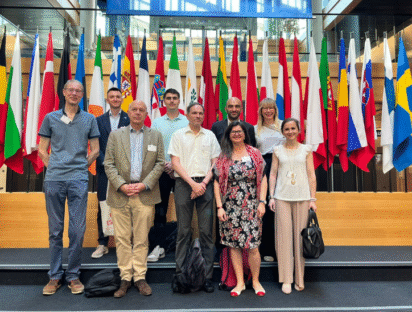
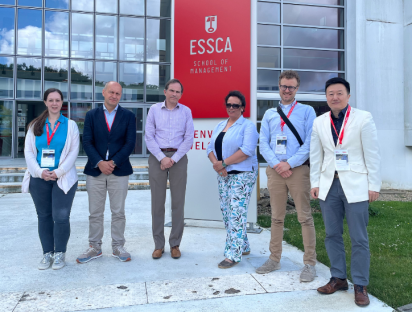
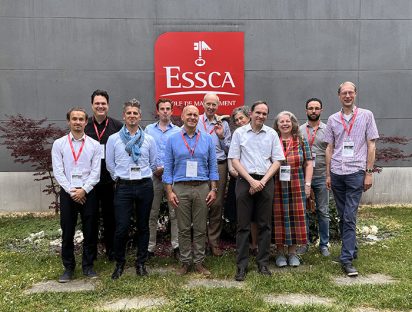
On 23–24 April 2026, the EU*Asia Institute and the Shanghai Campus of ESSCA School of Management successfully hosted the Institute’s “Jean Monnet annual conference in European Studies", together and in parallel with the conference on "The EU's 7Ds: Cross-Party Perspectives and the China Dimension," organized by East China Normal University (ECNU).
The conference attracted strong academic participation, bringing together approximately 50 scholars and professionals from mainland China, France, Germany, the United States, Hong Kong SAR, Poland, Spain, Belgium, the Netherlands, Austria, Cyprus, and Russia, with over 20 of them participating in the separate workshop sessions organized by the EU*Asia Institute at ESSCA. The active engagement of scholars, researchers, and students fostered dynamic discussions and meaningful academic exchange throughout the two-day event.
The conference opened with welcome remarks from Prof. Jing Men (Jean Monnet Chair, ECNU), Prof. Chun Ding (Jean Monnet Chair, Fudan University, and President of the Shanghai Association of European Studies), Prof. Guanjun Wu (Dean of the School of Politics and International Relations, ECNU), and Prof. Thomas Hoerber (Director of the EU*Asia Institute at ESSCA, Jean Monnet Chair and leader of the Jean Monnet Centre of Excellence "STARS").
The speakers welcomed the attendees, introduced the academic structure of the workshop, and highlighted recent developments in European Studies and EU-China research, while also emphasizing the broader purpose of the conference.
The first session, "Europe in (and) the World – Defence Policy," chaired by Prof. Thomas Hoerber, focused on contemporary security challenges and Europe–Asia defence relations. Prof. Xiangfeng Yang (Lingnan University, Hong Kong) analyzed China's response to the Russia–Ukraine war and the interconnection between European and Asian security, highlighting China's balancing strategy between maintaining ties with Russia and addressing European concerns. Prof. Biao Zhang (China University of Political Science and Law) examined Chinese scholarly perceptions of European strategic autonomy in defence, exploring how Chinese academics view EU defence integration (PESCO, the European Defence Industry Strategy, and EU–NATO relations). The lively Q&A session that followed debated China's foreign policy realism, wartime neutrality, and the role of international law in the Russia–Ukraine conflict, underscoring the complexity of global security governance and the value of academic dialogue.
The second session, "Europe in (and) the World – Foreign Policy," chaired by Dr. Yixiong Huang (ESSCA, EU*Asia Institute), examined foreign policy positioning and the global order. Prof. Zhuo Fu (Communication University of China) analyzed Italian media discourse on China policy under the Meloni government, noting a shift in engagement but a continued commitment to pragmatism and multilateralism. Prof. Michael Reiterer (former EU Ambassador to South Korea, Brussels School of Governance) traced the evolution of Europe's perception of China over the past decade, from partner to competitor, then to systemic rival, and more recently, with the onset of Trump's second term, a possible return to seeing China as a multilateral “partner”. He identified varying levels of risk in EU-China relations and proposed strengthened cooperation on global governance through soft institutionalization. The discussions underscored the growing importance of European foreign policy autonomy and the need for continued academic and policy dialogue in a rapidly changing international system.
The third and fourth sessions focused on sustainability policies from global and European perspectives. Shutian Deng (Beijing Foreign Studies University) examined the EU–Mercosur agreement's role in EU’s de-risking strategies. Blanca Marabini San Martín (Universidad Autonoma de Madrid) explored EU–China tech competition and decarbonization via China's EV sector. Muhsin Manas Kavasoglu (ECNU) compared AI regulations across the EU, Japan, South Korea, Singapore, and ASEAN, noting challenges to global convergence. Prof. Pengfei Hou (Xinjiang University) analyzed South Korea's nuclear cooperation with CEE countries, balancing "errands of mercy" and neo-mercantilism. Congrui Qiao (legal expert, Netherlands) addressed Chinese enterprises' struggles with Western ESG ratings, arguing that cultural and developmental differences create biases, and that current standards lack local content for developing countries. The discussions highlighted sustainability frameworks' impact on trade, industrial policy, and competitiveness, with a recurring theme: balancing environmental responsibility with economic security and strategic autonomy.
The final session focused on European values, society, and democracy. Nikoletta Syvak (ECNU) explored the impact of European populism on democratic transformation. Agata Naruszewicz (ECNU) examined structural constraints on the development of the political left in Poland. Min Du (Shanghai University of International Business and Economics) employed big data analysis to investigate the impact of the EU's investment screening mechanism on bilateral corporate investment. Taken together, the session shed light on key tensions shaping Europe today: the rise of populist movements, internal political fragmentation, and the growing importance of geoeconomics.
A key highlight of the second day was the presentation of Euroglopaedia by Prof. Thomas Hoerber and Prof. Stéphanie Laulhé Shaelou. Developed as a core deliverable of the Jean Monnet Centre of Excellence STARS, this open-access academic platform builds on the legacy of the Jean Monnet Chair TRES while aligning with the Centre’s objectives of fostering knowledge dissemination and academic collaboration in European studies. The session offered participants a clearer understanding of the platform’s editorial process and strategic positioning, reinforcing the conference’s long-term commitment to accessible academic publication and the international circulation of research.
The event concluded with a book launch of Remade in South China: Bottom-Up Innovation in Guangdong by Prof. Wei Zhao (South China University of Technology, External Member of the EU*Asia Institute), which further extended reflections on the evolving relationship between Europe, China, and the changing global order.
The 2026 Annual Jean Monnet Conference demonstrated the value of Europe-Asia academic cooperation in addressing shared global challenges. It provided a platform for interdisciplinary exchange and strengthened collaboration between ESSCA, East China Normal University, and an international network of scholars. The conference highlighted the continued relevance of European studies to global political transformations, sustainability, and evolving governance.
By combining academic discussion, editorial work and international collaboration, the event contributed to the Jean Monnet Chair TRES's mission of promoting excellence in teaching and research, whilst also contributing to its enduring legacy: the 'Euroglopaedia' publication initiative, a freely accessible academic online platform that will be published as part of the Institute's follow-up project, the Jean Monnet Centre of Excellence STARS.
Funded by the European Union. Views and opinions expressed are however those of the author(s) only and do not necessarily reflect those of the European Union or the European Education and Culture Executive Agency (EACEA). Neither the European Union nor EACEA can be held responsible for them.