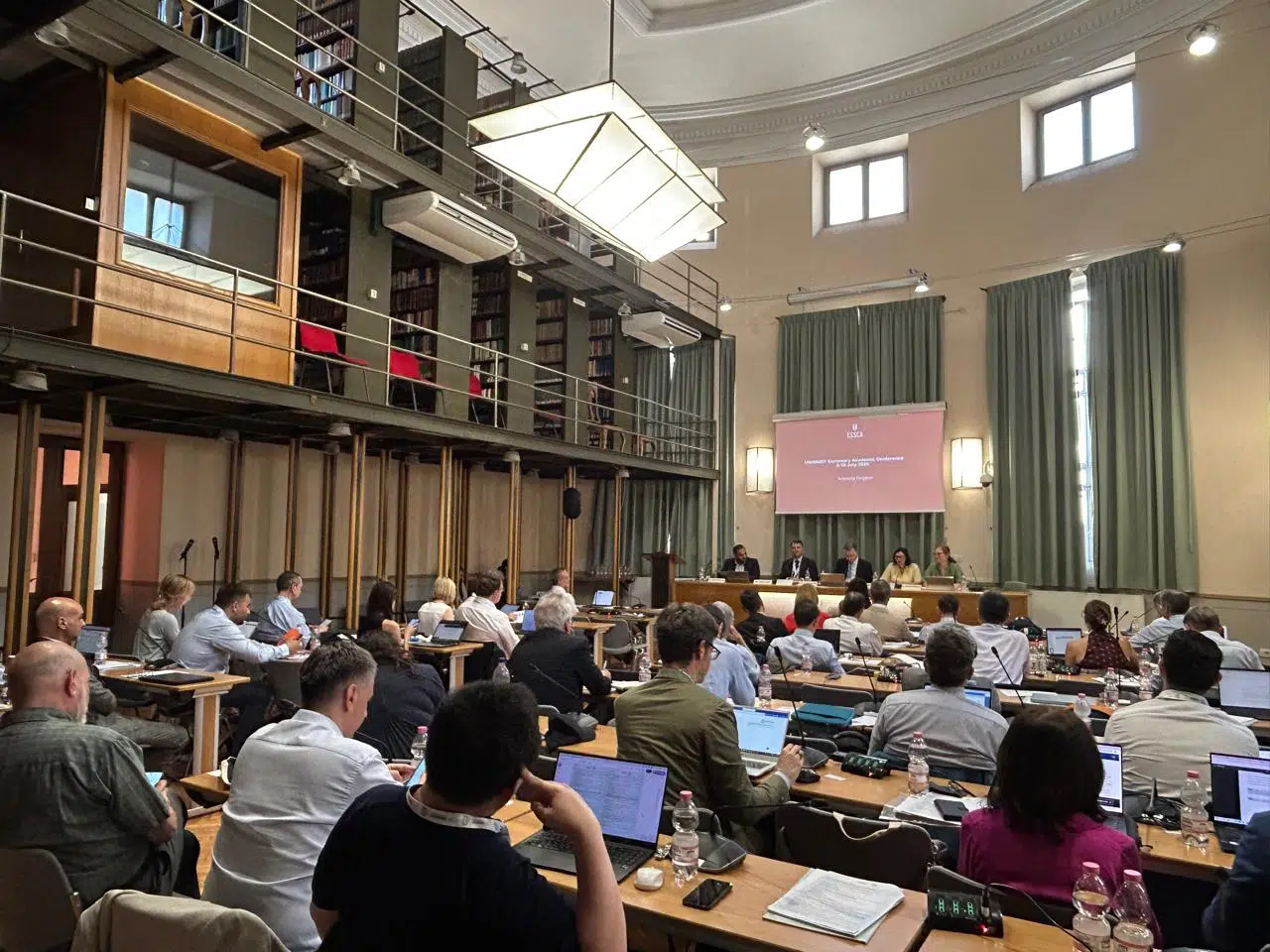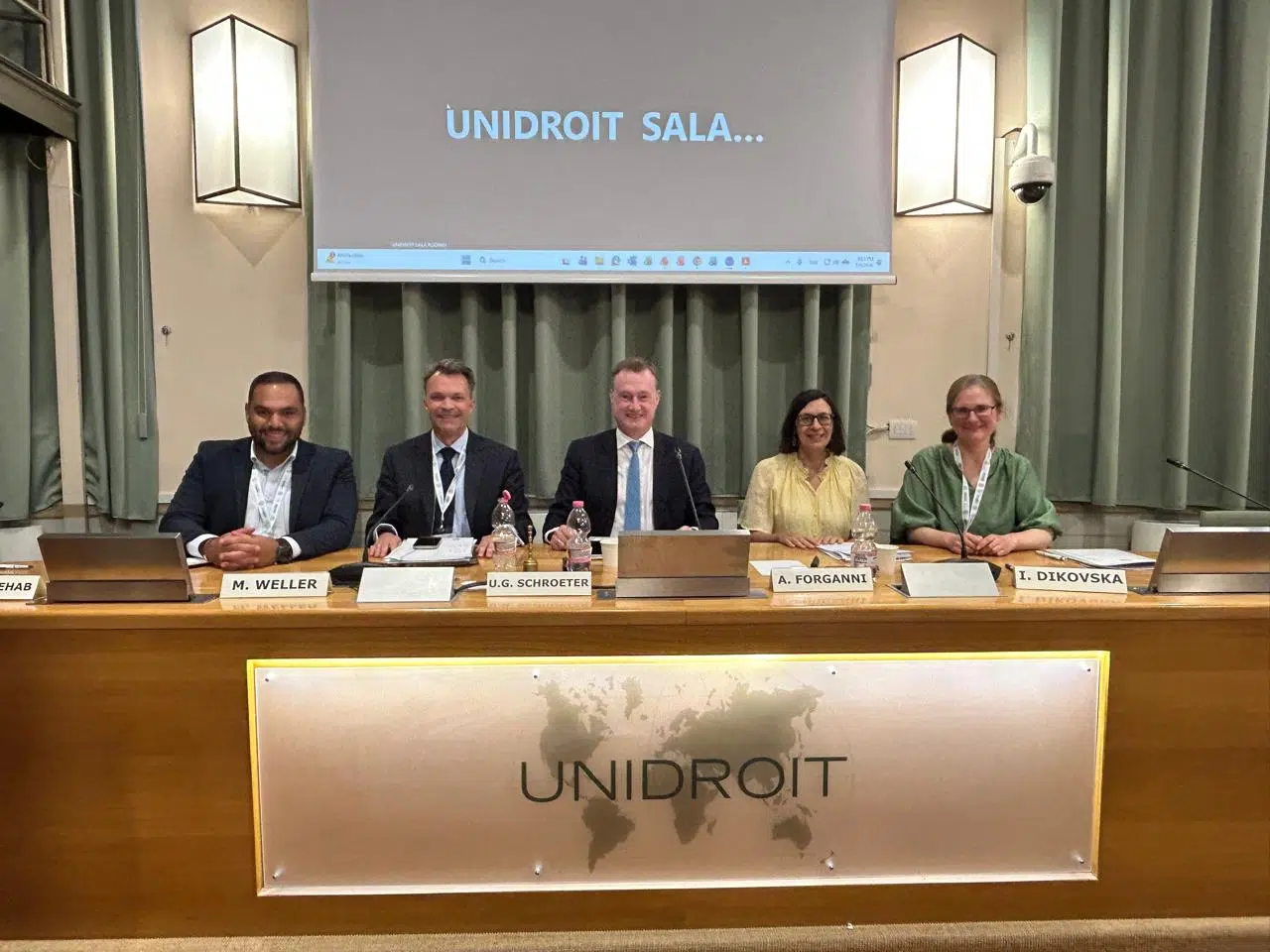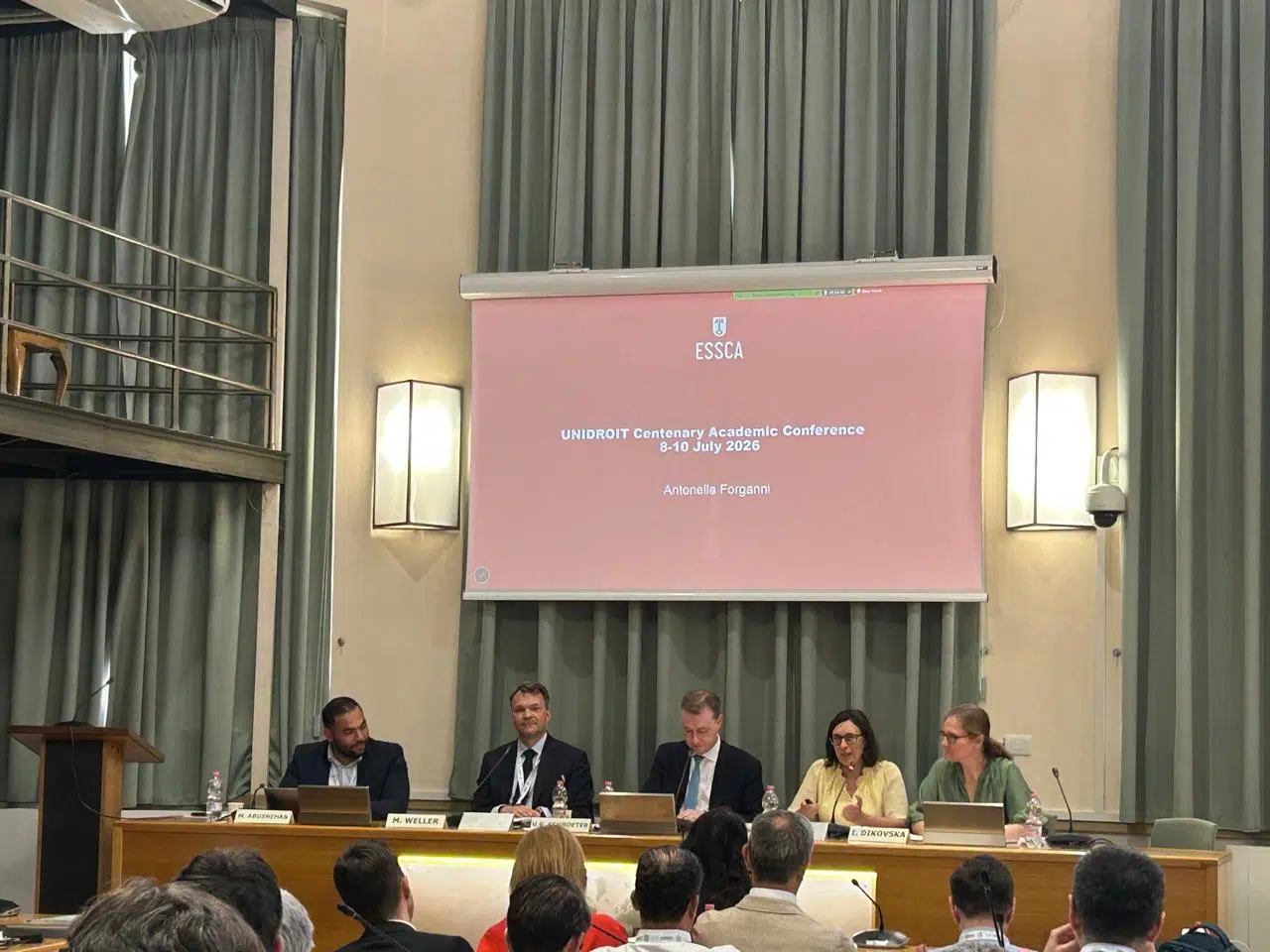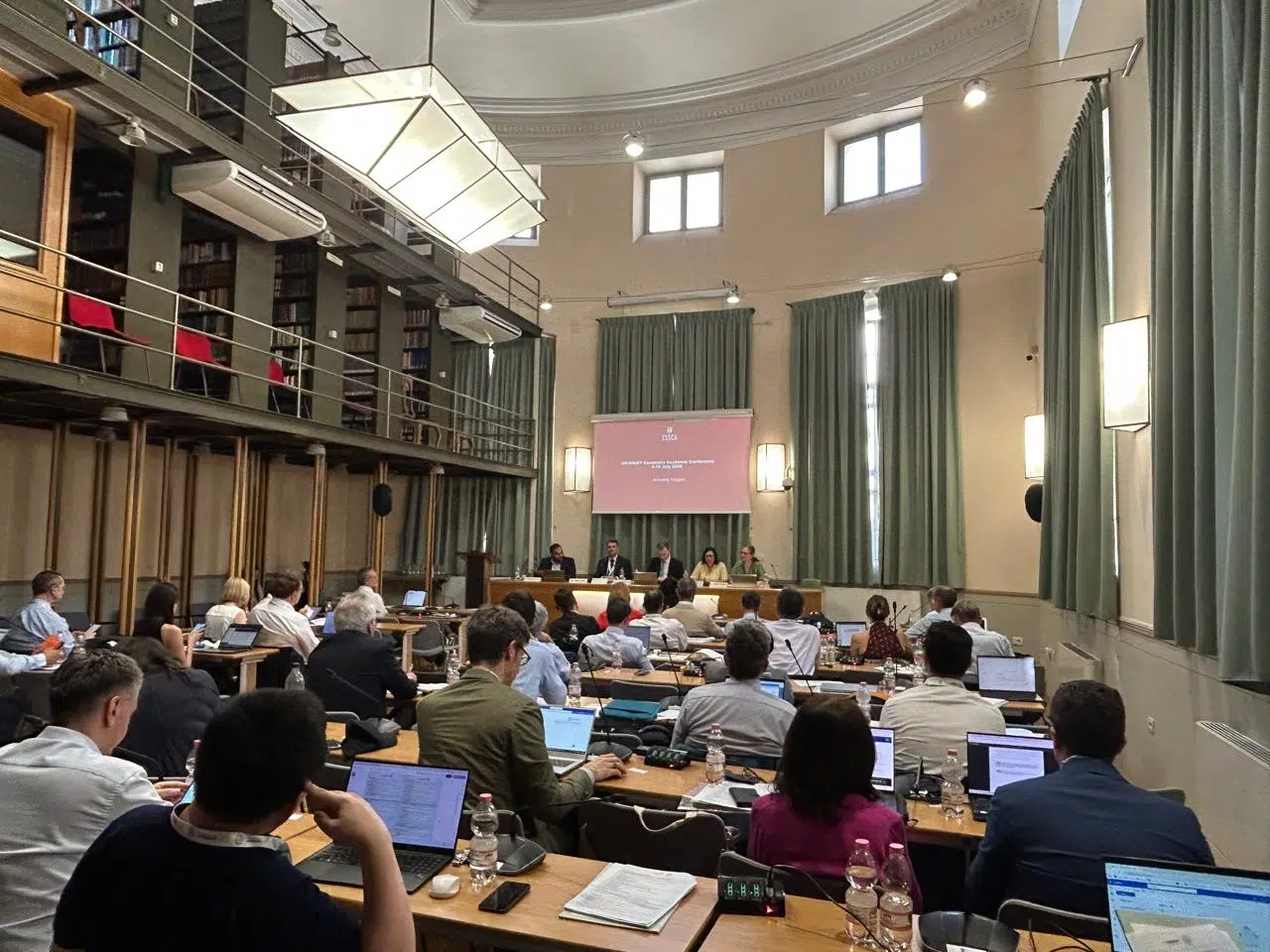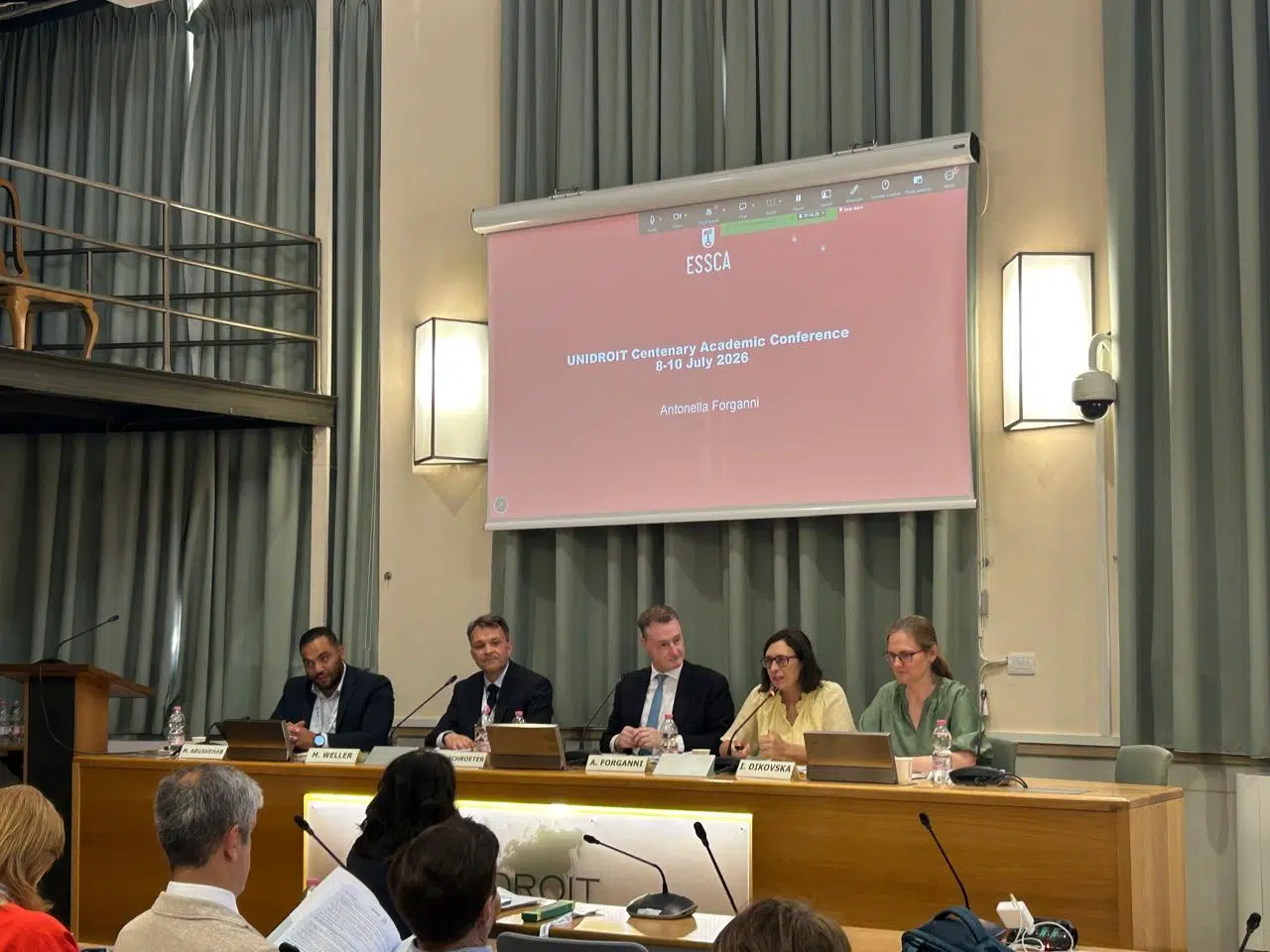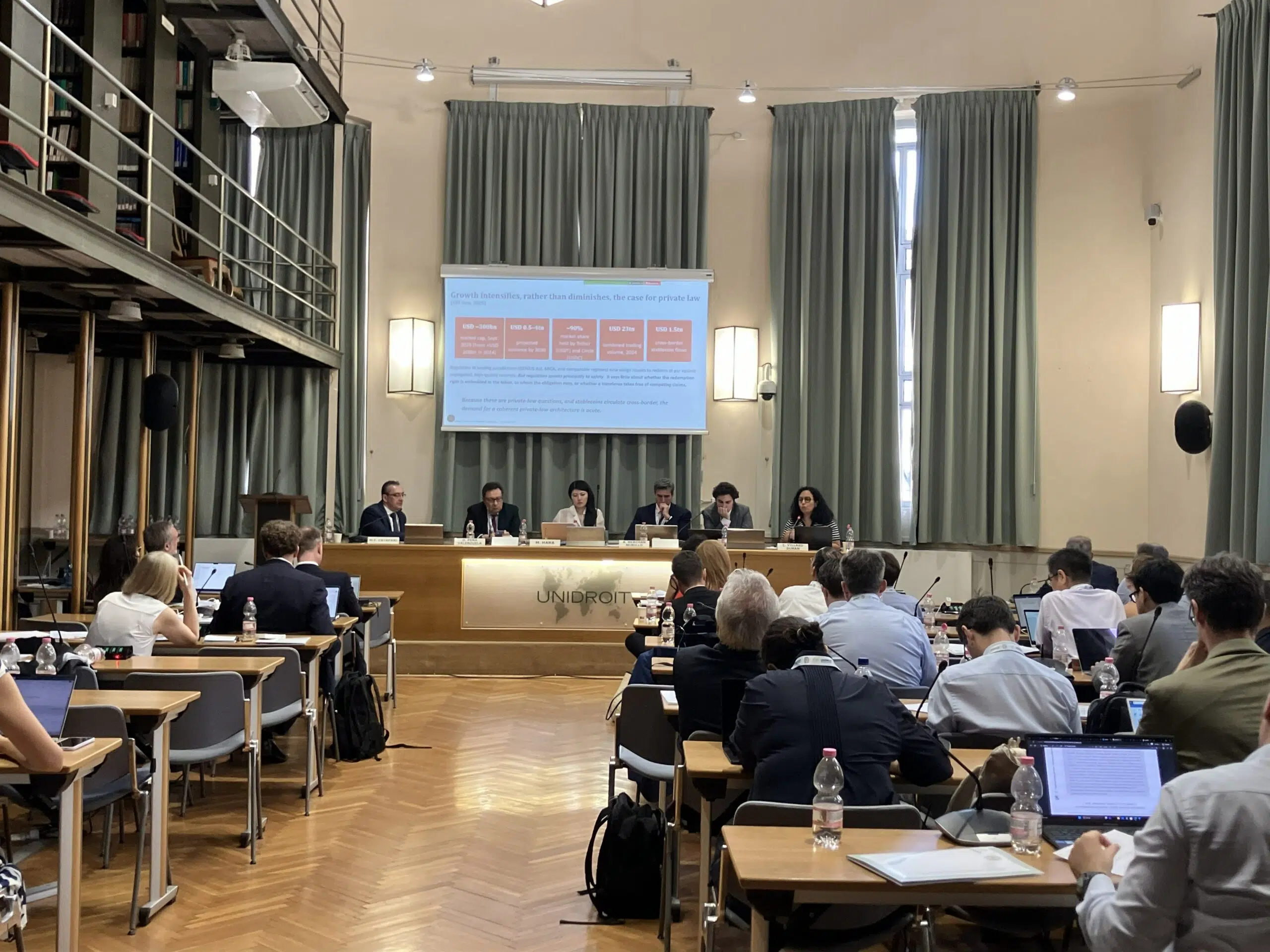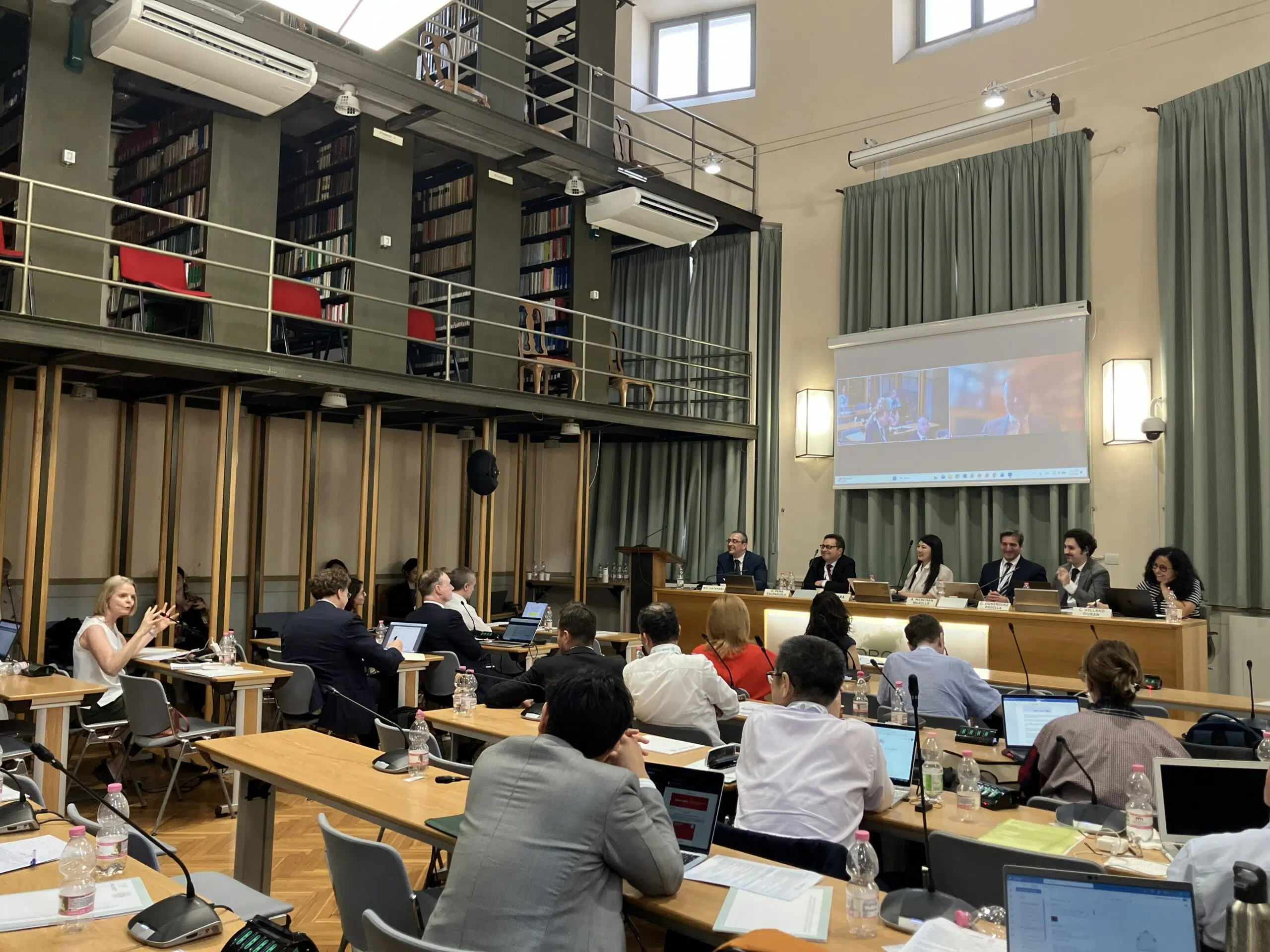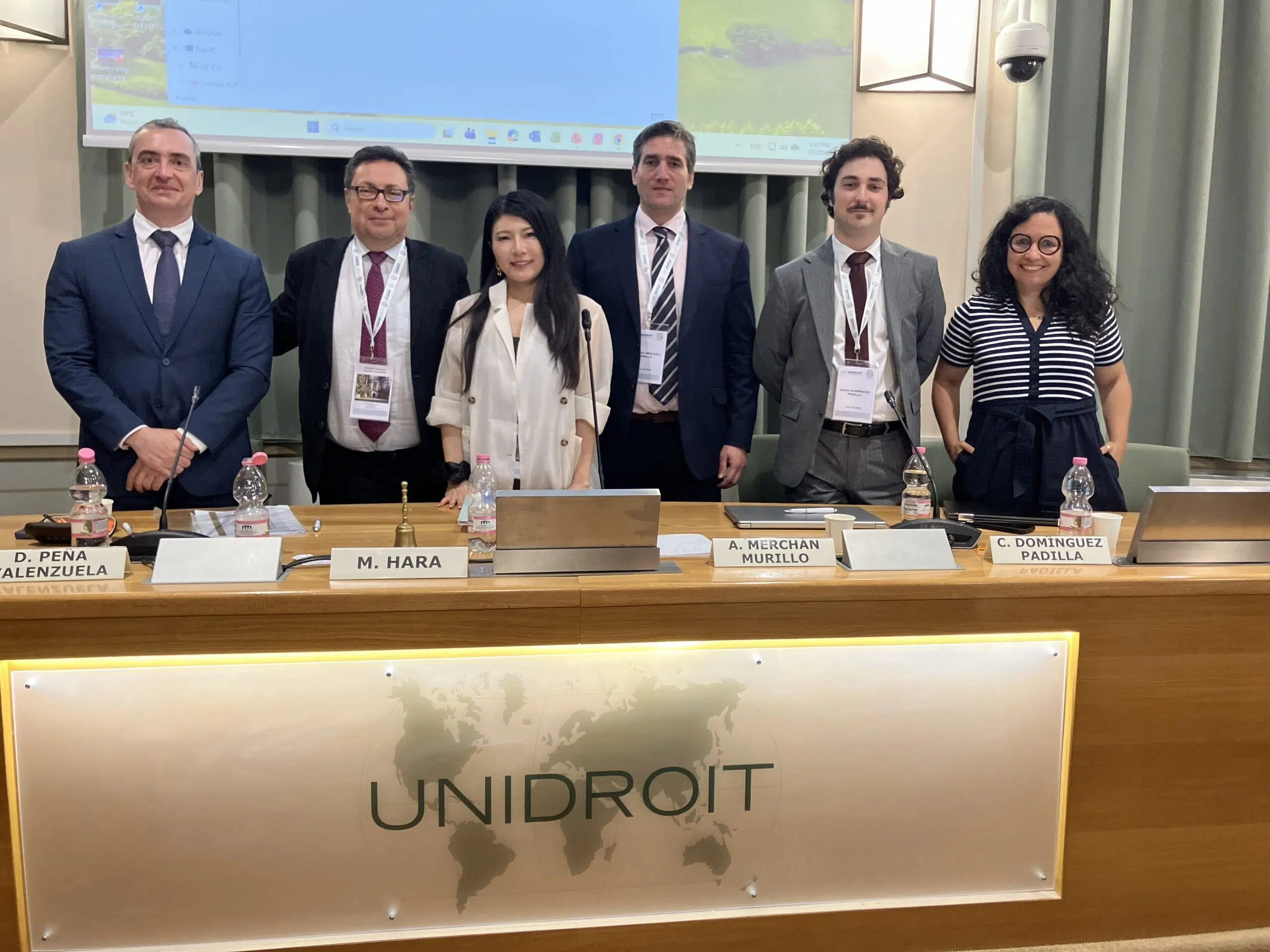
Antonella Forganni and Camila Villard Duran, professors at ESSCA and members of the EU*Asia Institute, participated in the UNIDROIT Centenary Academic Conference, held from 8 to 10 July at Villa Aldobrandini in Rome. This invitation-only conference brought together leading international scholars and practitioners to reflect on the evolution, teaching and practice of transnational law over the past century, and to discuss future challenges and opportunities in the development of transnational legal frameworks.
Established in 1926 as an auxiliary organ of the League of Nations, UNIDROIT has played a central role in reducing legal fragmentation in cross-border transactions by developing uniform rules and principles capable of facilitating international trade and cooperation. Following the dissolution of the League of Nations, UNIDROIT was reconstituted in 1940 through its own Statute and has since continued its mission of promoting the harmonisation and unification of private law across jurisdictions.
Today, UNIDROIT develops international conventions, model laws, principles, and other legal instruments aimed at enhancing legal certainty and supporting international economic relations.
Adressing emerging challenges: Space law and technology
Antonella Forganni presented a paper entitled “The Celestial Ceiling in Harmonising Private Law: Challenges for the Space Protocol.” The presentation contributed to Conference Theme III, Challenges and Opportunities in Ensuring the Enforceability of International and Transnational Law across Jurisdictions.
The paper focused on the Space Protocol to the Cape Town Convention on International Interests in Mobile Equipment, a UNIDROIT-sponsored instrument designed to facilitate asset-based financing and secured transactions involving space assets.
It examined the unique challenges affecting the Protocol's implementation and effectiveness with particular emphasis on the difficulties of achieving legal harmonisation technologically complex sector.
Prof Forganni's paper also contributed to ongoing debates regarding the future role of UNIDROIT in addressing legal challenges arising from new technologies and rapidly evolving economic sectors.
Digital finance and the rise of stablecoins
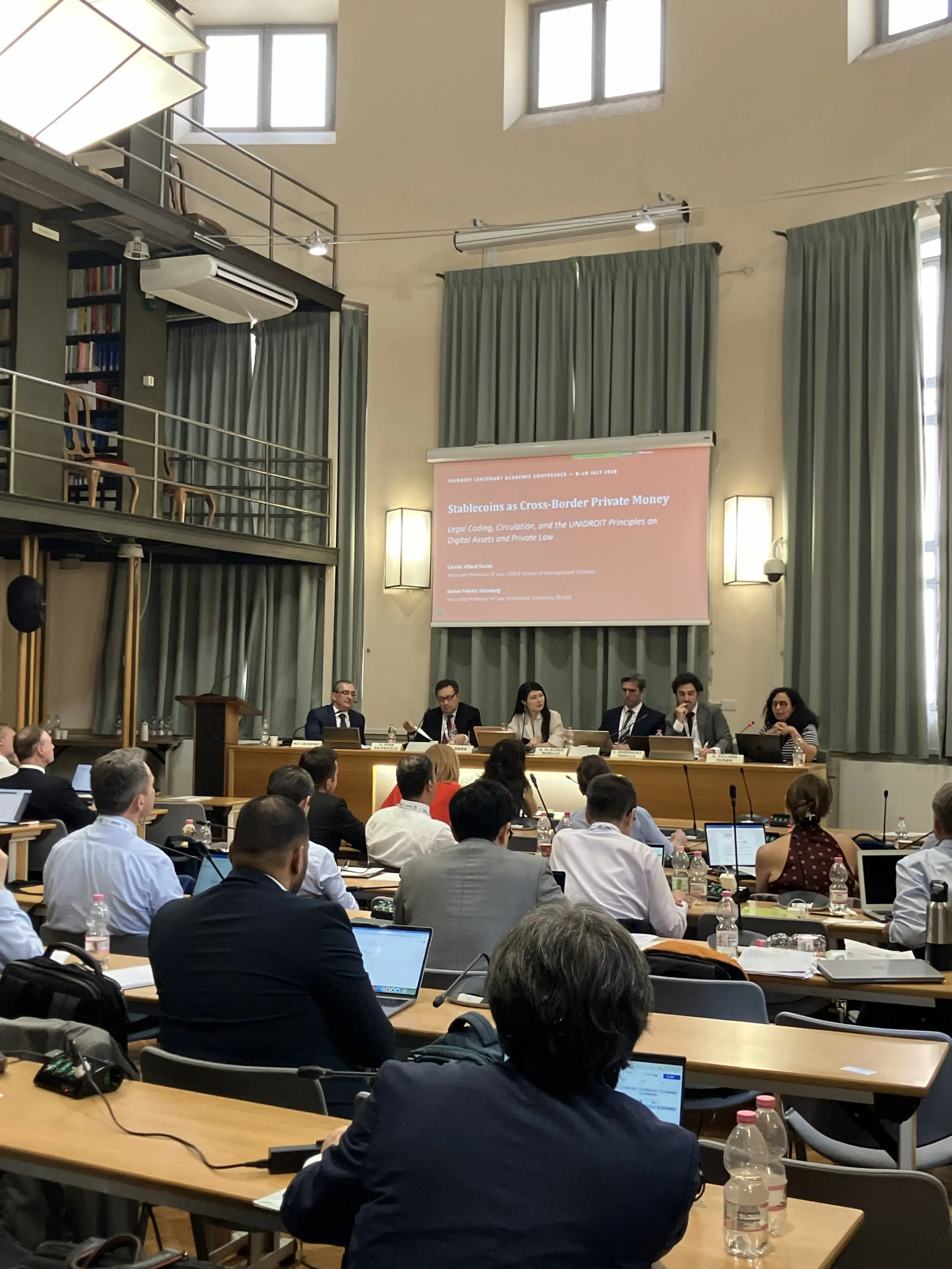
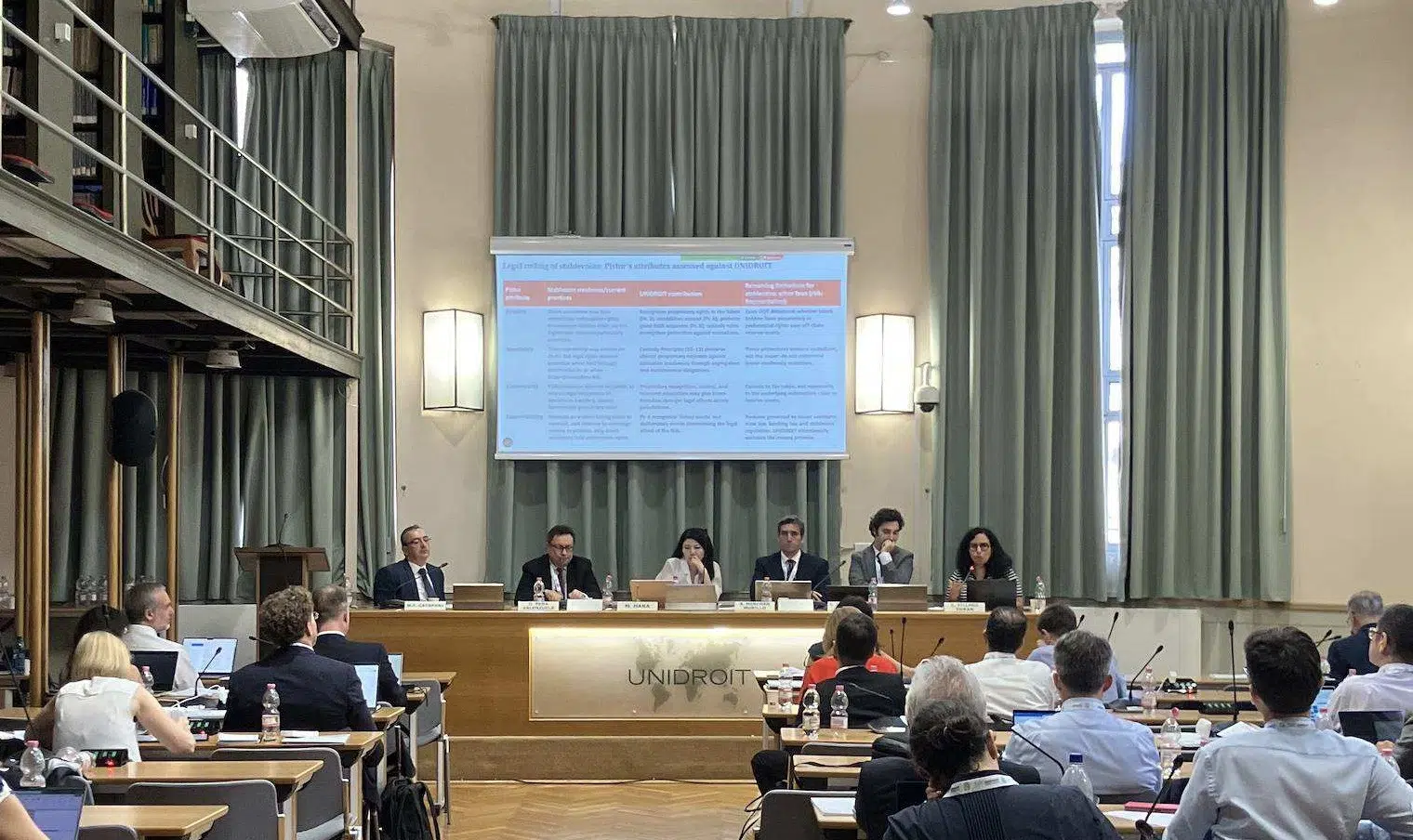
Camila Villard Duran presented a paper entitled “Stablecoins as Cross-Border Private Money: Propertisation, Custody, and Contractual Rights under the UNIDROIT Principles on Digital Assets and Private Law”.
The presentation formed part of Conference Theme IV, Legal Analysis of UNIDROIT Instruments.
The paper examined the recently adopted UNIDROIT Principles on Digital Assets and Private Law as a conceptual and normative framework for analysing stablecoins as emerging forms of cross-border private money.
It explored the legal characterization of stablecoins, the nature of proprietary interests in digital assets, custodial arrangements, and the contractual rights arising from their use.
By situating stablecoins within the broader context of transnational private law, the paper highlighted how the UNIDROIT principles on digital assets help adress legal challenges created by digital finance and technological innovation.
Strengthening the foundations of global private law
Professors Forganni and Villard Duran's participation in the UNIDROIT Centenary Academic Conference offered an important opportunity to engage with a diverse international community of scholars and practitioners working on contemporary issues of transnational law.
Their presentations demonstrated the continuing relevance of UNIDROIT's work in tackling emerging issues, notably in the field of digital technologies, as well as in complex and evolving sectors such as space activities.
They highlighted the adaptability of transnational legal instruments and the ongoing challenges of ensuring their effective implementation across different jurisdictions.
These exchanges reaffirmed UNIDROIT's historic mission of promoting legal certainty, facilitating international cooperation, and strengthening the foundations of global private law.